



Eye Test at Vision in the Village
Comprehensive Eye Care in Southfields Village
Advanced Diagnostic Technology
What to Expect During Your Visit


Protecting Your Long-Term Eye Health
Book Your Eye Test Today
Frequently Asked Questions
How much does an eye exam cost at Vision in the Village Opticians?
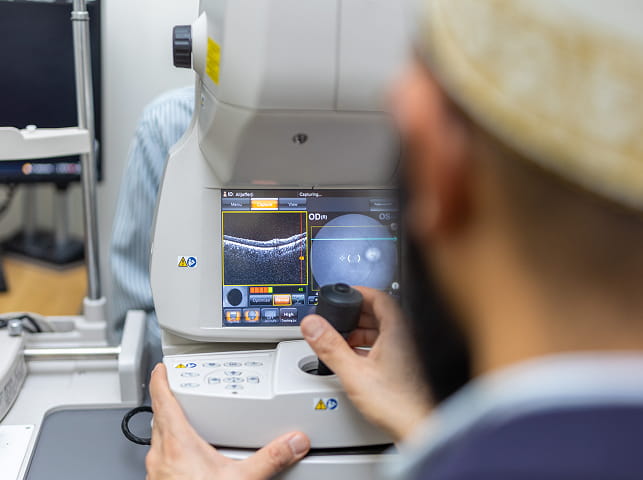
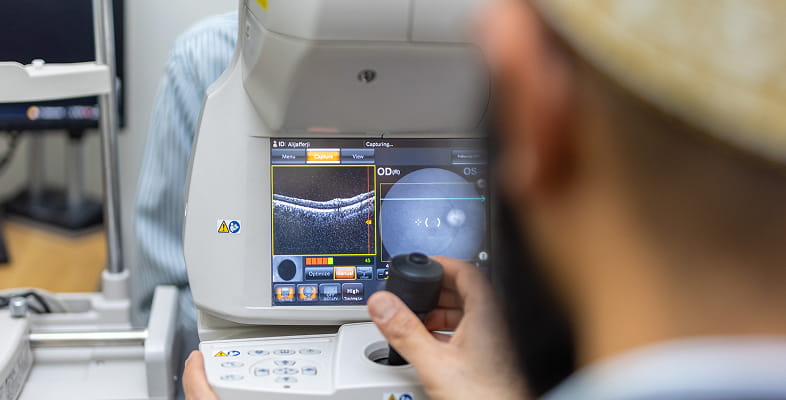
At Vision in the Village Opticians in Southfields private comprehensive eye examinations are typically priced between £35-£50, depending on the complexity of testing required. Our private examinations include advanced diagnostic imaging such as OCT (Optical Coherence Tomography) scans and retinal photography, which provide detailed analysis of your eye health beyond standard testing.
We also offer specialist examinations for contact lens fittings, which are priced separately as they require additional consultation time and follow-up care. All our eye examinations are conducted by GOC-registered optometrists with professional indemnity insurance.
How often should I have an eye exam?
The frequency of eye examinations depends on your age, eye health status, and risk factors, but we generally recommends that adults aged 18-60 with healthy eyes should have a comprehensive eye exam every two years as per College of Optometrists guidelines.
However, if you’re over 60, you should have annual eye examinations as age-related eye conditions such as cataracts, glaucoma, and macular degeneration become more prevalent and early detection significantly improves treatment outcomes.
Children should have their first eye examination at around 3-4 years old, then before starting school, and subsequently every one to two years during their school years to detect conditions like amblyopia (lazy eye) or significant refractive errors that could affect learning. If you have diabetes, glaucoma, a family history of eye disease, high myopia (short-sightedness), or take certain medications that affect eye health, annual examinations are essential regardless of age.
Can you detect eye diseases during a routine eye exam?
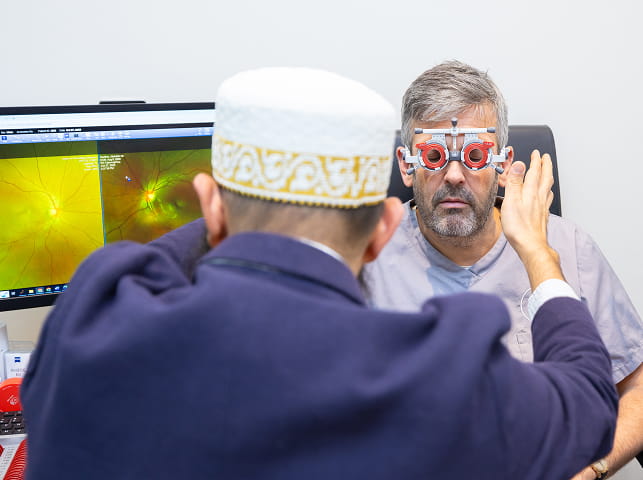
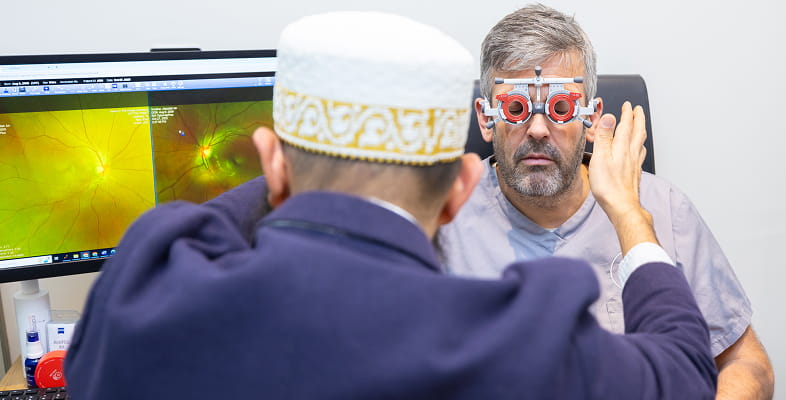
Yes, routine eye examinations at Vision in the Village Opticians in Southfields include comprehensive screening for a wide range of eye diseases and systemic health conditions that manifest in the eyes. Our GOC-registered optometrists are trained to detect early signs of glaucoma through intraocular pressure measurement, optic nerve head assessment, and visual field analysis when indicated, allowing for timely referral to ophthalmology services before significant vision loss occurs.
We routinely screen for age-related macular degeneration (AMD) by examining the central retina for drusen, pigmentary changes, or signs of wet AMD, which is crucial as early treatment can preserve central vision. Diabetic retinopathy screening is performed for all diabetic patients, identifying microaneurysms, hemorrhages, exudates, and other vascular changes that indicate diabetes-related eye damage requiring monitoring or treatment. Cataracts are easily identified during slit lamp examination, and we can advise when cataract progression warrants surgical referral. Our digital retinal imaging and OCT scanning technology enables detection of retinal detachments, retinal holes, epiretinal membranes, and other structural abnormalities.
Vision in the Village Opticians also utilises advanced heart scan technology during eye examinations, which analyzes the blood vessels in your retina to assess cardiovascular health risks. This innovative technology can identify changes in retinal vasculature that correlate with increased risk of heart attack and stroke, often before symptoms appear, by measuring vessel caliber, tortuosity, and other biomarkers linked to systemic cardiovascular disease.
Are your optometrists qualified?
Yes, all optometrists practicing at Vision in the Village Opticians in Southfields are fully qualified, registered with the General Optical Council (GOC), and maintain current professional indemnity insurance as required by UK law.
Our optometrists have completed accredited university degrees in optometry, typically a four-year Master’s degree (MOptom) or equivalent qualification, followed by a pre-registration period of supervised practice and successful completion of professional qualifying examinations. GOC registration requires optometrists to adhere to strict Standards of Practice, maintain continuing education and development over a three-year cycle, and undergo regular professional performance reviews.
You can verify any optometrist’s registration status by checking the GOC online register at optical.org, where you’ll find their registration number, qualification details, and any specialty areas. Our team participates in ongoing professional development including advanced training in areas such as diabetic retinopathy screening, glaucoma detection and monitoring, dry eye management, and pediatric optometry.