



Frame Styling Consultation
Discover Your Perfect Eyewear Match
The Art and Science of Frame Selection
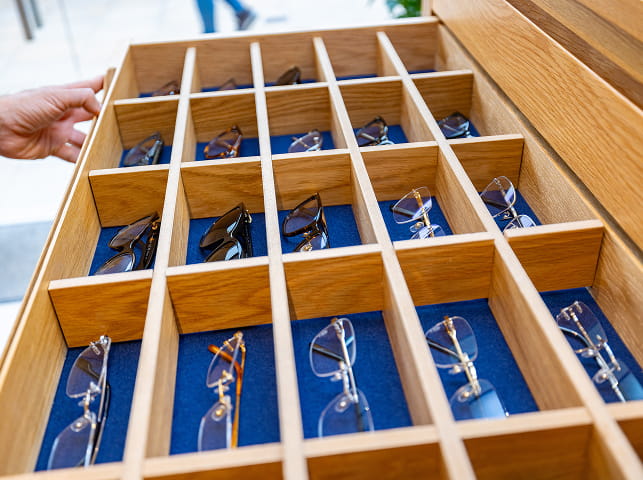
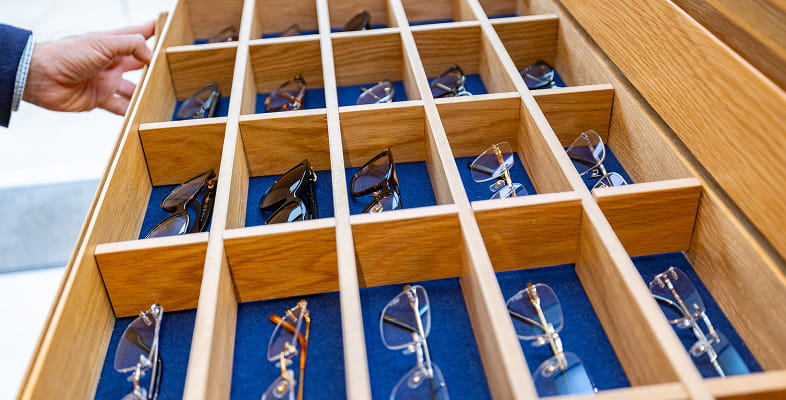
Our Curated Designer Collection
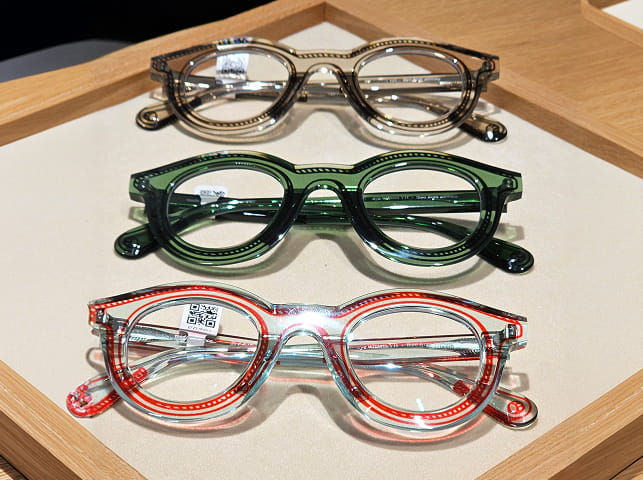
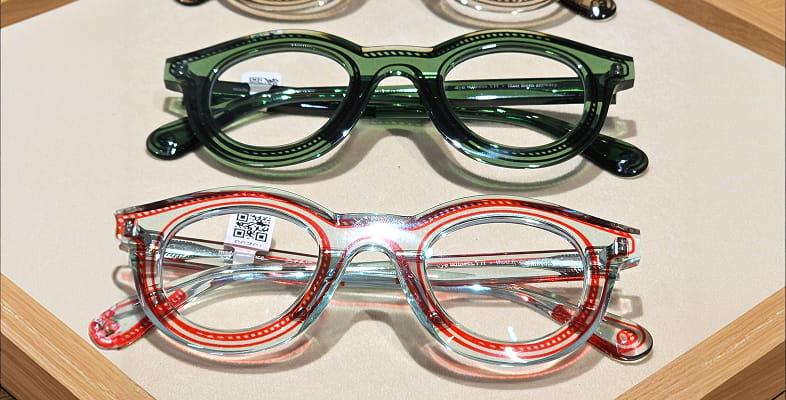
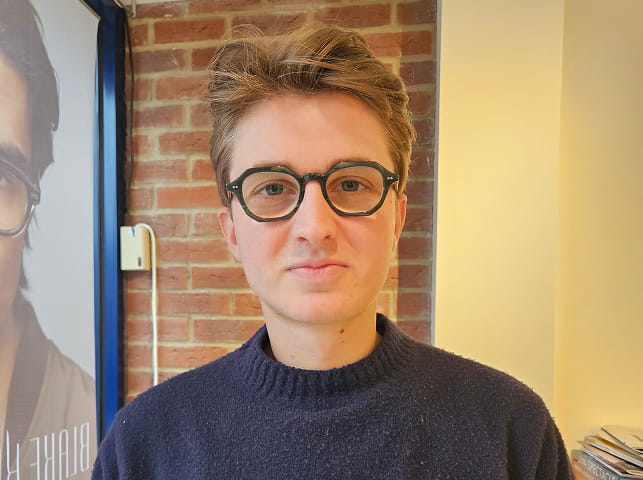
Your Personal Styling Experience
Expert Guidance Every Step




Book Your Styling Consultation Today
Frequently Asked Questions
How do I choose the right frame shape for my face?
Selecting the perfect frame shape involves a systematic approach that our opticians at Vision in the Village follow during every styling consultation. First, we assess your face shape by examining the width of your forehead, cheekbones, and jawline, along with the overall length of your face. We then apply the principle of contrast, choosing frames that balance rather than emphasise your natural features. For round faces with soft curves and similar width and length, we recommend angular frames such as rectangular or geometric styles that add definition and create the illusion of length.
Square faces, characterised by a strong jawline and broad forehead, benefit from rounded or oval frames that soften angular features. Oval faces, being naturally balanced with gently curved lines, are the most versatile and can accommodate everything from aviators to cat-eye styles. Heart-shaped faces with wider foreheads and narrow chins look best in bottom-heavy frames, rimless styles, or aviators that draw attention downward. Triangle-shaped faces require frames that add width to the upper face, such as cat-eye or browline styles.
During your appointment at our Southfields practice, we’ll have you try on multiple frame shapes whilst standing before our consultation mirrors, photographing options if helpful, and providing honest feedback about how each style interacts with your proportions. We also consider your hairstyle, as this frames your face alongside the spectacles, and discuss whether you prefer a subtle, professional look or a bold fashion statement.
What frame colours work best with my skin tone and hair colour?
Determining your ideal frame colours is a structured process that begins with identifying your skin’s undertone, which remains constant regardless of sun exposure or surface colour. At Vision in the Village, we use several assessment techniques during your frame styling consultation. We examine the veins on your inner wrist, blue or purple veins indicate cool undertones, whilst green veins suggest warm undertones, and a mix indicates neutral. We also observe how your skin responds to gold versus silver jewellery; if gold flatters you, you likely have warm undertones, whilst silver suggests cool undertones.
For warm skin tones with yellow, peachy, or golden undertones, we guide you towards frames in tortoiseshell, honey, beige, gold, copper, warm browns, olive green, orange, coral, and warm reds. Cool skin tones with pink, red, or blue undertones are enhanced by silver, gunmetal, black, blue-grey, rose-brown, plum, magenta, pink, and blue-based jewel tones. Those with neutral undertones have the flexibility to wear both palettes. We then factor in your hair colour as a secondary consideration brunettes can wear rich browns, burgundy, and deep purples; blondes often suit lighter tortoiseshell, pastels, and soft metallics; redheads look striking in greens, browns, and gold tones; whilst those with grey, silver, or white hair can carry bold colours like bright red or cobalt blue, or opt for sophisticated black or crystal frames.
During your consultation, we’ll have you hold different coloured frames near your face under our colour-corrected lighting to see which tones make your eyes brighter, your skin clearer, and your overall appearance more vibrant. We encourage you to bring along clothing items you wear frequently, as your frames should coordinate with your existing wardrobe. We also discuss whether you want your frames to blend naturally with your colouring or serve as a contrasting accent piece.
Should I choose large or small frames, and what factors affect this decision?
Frame sizing is a precise science that we approach methodically at Vision in the Village Opticians. Every frame has three key measurements printed on the inside of the temple arm: lens width (typically 40-62mm), bridge width (usually 14-24mm), and temple length (generally 135-150mm). During your consultation, we begin by taking facial measurements using digital callipers or our frame fitting system. We measure the distance between your pupils (PD), the width of your face at the widest point, and the vertical space available for lenses.
The fundamental rule is that frames should align with or sit just inside the widest part of your face, typically at the temples, without extending beyond this point. Your eyes should be positioned roughly in the centre of each lens, both horizontally and vertically, to ensure optimal vision through the optical centre. For smaller faces (typically those with a face width under 125mm), we recommend frames with lens widths of 48mm or below. Medium faces (125-135mm width) suit lens widths of 49-54mm, whilst larger faces (over 135mm) can accommodate frames of 55mm and above. However, prescription strength significantly impacts this decision. High minus (myopic) prescriptions cause lenses to be thinner in the centre and thicker at the edges, so we typically recommend smaller frames to minimise edge thickness and reduce the overall weight of the spectacles.
Conversely, high plus (hyperopic) prescriptions are thicker in the centre, and whilst smaller frames help here too, the priority shifts to choosing frames with adequate rim thickness to conceal lens edges. We also measure the distance from your pupil to the lower edge of where the frame will sit; for varifocal or progressive lenses, you need at least 28-30mm of vertical lens height to accommodate the reading, intermediate, and distance zones. Lifestyle factors play a crucial role in our recommendations e.g. if you’re highly active, play sports, or have young children, we might suggest smaller, more secure-fitting frames with adjustable nose pads and wrap-around temple tips. For office-based work requiring extended computer use, medium-sized frames with adequate depth work well for occupational lenses.
Fashion preferences matter too, and we’ll discuss current trends, your personal style, and whether you want frames that make a statement or provide understated elegance. We’ll have you try on various sizes, checking how they sit on your nose bridge, whether they touch your cheeks when you smile, if the temples grip comfortably without pinching, and whether the weight feels balanced. We take photographs from multiple angles so you can see how different sizes affect your facial proportions, and we’re honest about when a frame you love simply isn’t the right size for your features or prescription needs.
Are there frame styles that work better for different types of prescription lenses?
Yes, your prescription type is actually one of the most critical factors in frame selection and at Vision in the Village Opticians we integrate optical requirements into every styling decision from the outset. When you visit our Southfields practice, we begin by reviewing your prescription in detail. For high myopia (short-sightedness, typically over -4.00 dioptres), lenses are thinner in the centre and progressively thicker towards the edges. To minimise this edge thickness and the associated weight, we recommend smaller frames that reduce the overall lens diameter, along with frames featuring thicker, darker rims, particularly full-rim acetate frames that effectively conceal the lens edges. We also suggest higher-index lens materials (1.67 or 1.74 refractive index) which are thinner and lighter, and we ensure the frame’s shape is more rounded rather than rectangular, as this reduces the maximum edge thickness.
High hyperopia (long-sightedness, typically over +4.00 dioptres) creates lenses that are thicker in the centre and can magnify your eyes. Here, we recommend smaller frames to reduce central thickness, and we often suggest frames with a prominent top bar or bold upper rim to draw attention away from the magnification effect. Again, high-index lenses are beneficial, and we discuss aspheric lens designs that flatten the front curve to reduce magnification. For varifocal and progressive lenses, frame selection becomes quite specific. These lenses contain multiple prescriptions in different zones, distance vision at the top, intermediate in the middle, and reading at the bottom requiring adequate vertical lens height. We measure from your pupil position to the bottom of the frame, ensuring at least 28mm of depth, though 30-35mm is preferable for a more comfortable progression between zones. We avoid very small, narrow frames and highly curved wraparound styles, as these compromise the progressive corridor. The frame should also sit relatively close to your face (vertex distance of 12-14mm) for optimal performance.
For those requiring prism correction or significant astigmatism, frame stability is paramount. We recommend frames with adjustable nose pads that can be fine-tuned to maintain precise optical alignment, and we avoid rimless or semi-rimless frames for very strong prescriptions, as these lack the structural integrity to hold thicker lenses securely. Instead, we guide you towards full-rim metal or acetate frames. For single-vision distance or reading prescriptions of low to moderate strength (typically between -3.00 and +3.00), you have maximum flexibility and can choose virtually any frame style based purely on aesthetic preferences. If you’re considering rimless or semi-rimless frames for their minimalist aesthetic, we assess whether your prescription and lens material are compatible, these styles work best with polycarbonate or Trivex lenses and low to moderate prescriptions.
During your consultation, we use a combination of digital tools and our extensive product knowledge to show you examples of how different prescriptions look in various frame styles. We can demonstrate lens thickness using sample lenses, explain how different frame materials and colours affect the final appearance, and discuss coating options like anti-reflection treatments that reduce the visibility of thick lens edges. We also consider whether you need separate pairs for different tasks e.g. perhaps standard single-vision frames for driving and computer work, and a separate pair of dedicated reading glasses, or whether one pair of varifocals will meet all your needs. Our goal is to ensure that your frames not only suit your face and style but also provide the optical performance your prescription requires, delivered through lenses that are as thin, light, and aesthetically pleasing as possible.