



Advanced Eye Tests & Heart Scan
Pioneering Preventative Health Screening in Southfields
OCT Scanning: Seeing Beyond the Surface
Revolutionary Heart Health Screening Through Your Eyes
Who Benefits from Advanced Screening?
Invest in Your Future Health Today
Frequently Asked Questions
Can an eye test really detect heart disease risk?
Yes, Vision in the Village Opticians offers revolutionary cardiovascular health screening technology that analyses the blood vessels in your retina to assess your risk of heart attack and stroke. The retina contains a dense network of blood vessels that share similar characteristics with coronary arteries, making your eyes a unique and accessible window into your cardiovascular system.
Our advanced retinal imaging technology captures high-resolution images of these blood vessels and uses sophisticated algorithms to measure vessel calibre, arterial stiffness, tortuosity, and other biomarkers that correlate with cardiovascular disease risk. Research published in peer-reviewed medical journals has demonstrated that retinal vascular changes can indicate increased cardiovascular risk years before symptoms develop or traditional risk factors become apparent. This groundbreaking screening takes just minutes, requires no blood tests, involves no invasive procedures, and provides immediate results that our optometrists can discuss with you during your appointment.
How much does advanced health screening cost at Vision in the Village?
Advanced health screening services at Vision in the Village Opticians in Southfields are available as private appointments, with pricing structured to reflect the sophisticated technology and clinical expertise involved.
OCT (Optical Coherence Tomography) scanning is typically priced between £25-£40 when added to a comprehensive eye examination, or as a standalone service for existing patients requiring monitoring of known conditions.
Our revolutionary heart health screening through retinal imaging is generally priced between £30-£50, depending on the depth of analysis and reporting required.
Many patients choose our combined advanced screening package, which includes a comprehensive eye examination, OCT scanning, and cardiovascular health screening, typically ranging from £95-£125 for the complete assessment.
These private screening services are not currently covered by NHS funding, as they utilise advanced diagnostic technology beyond standard NHS sight test protocols. However, the investment in early detection can prove invaluable, as identifying conditions like glaucoma, macular degeneration, or cardiovascular disease risk at their earliest stages enables timely intervention and significantly better health outcomes.
Who should have advanced eye and heart screening?
Advanced screening at Vision in the Village Opticians is beneficial for everyone interested in proactive health management, but it’s especially important for specific patient groups where early detection provides the greatest clinical benefit.
Patients over 40 should strongly consider regular advanced screening, as the risk of age-related eye conditions such as glaucoma, macular degeneration, and cataracts increases significantly with age, and cardiovascular disease risk also rises substantially after 40. If you have diabetes, advanced screening including OCT scanning is essential, as diabetic retinopathy can develop without symptoms and early detection through detailed retinal imaging enables timely treatment that can prevent vision loss. Individuals with high blood pressure (hypertension) benefit from both retinal vascular imaging and OCT scanning, as hypertension affects the blood vessels throughout your body, including those in your eyes and heart.
Family history is a crucial risk factor, if close relatives have experienced glaucoma, macular degeneration, heart disease, stroke, or diabetes, you have significantly elevated risk and should consider annual advanced screening. Patients with high myopia (short-sightedness over -6.00 dioptres) face increased risk of retinal detachment, glaucoma, and macular changes, making OCT scanning particularly valuable.
Even if you have no known risk factors, many patients at our Southfields practice choose annual advanced screening as part of their preventative health strategy, providing peace of mind and establishing baseline measurements for future comparison.
How long does advanced screening take and what happens during the appointment?
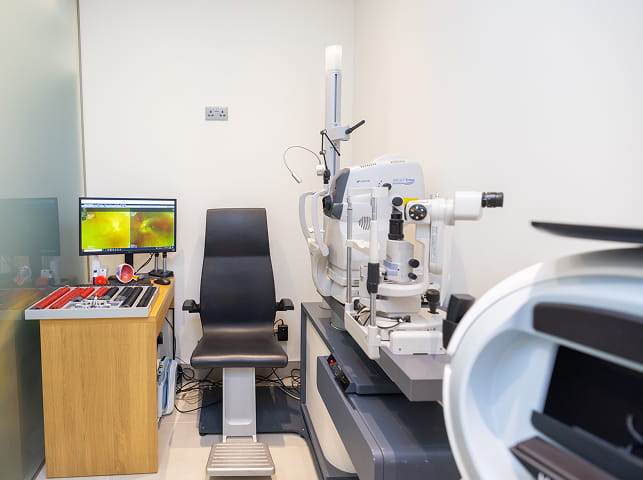
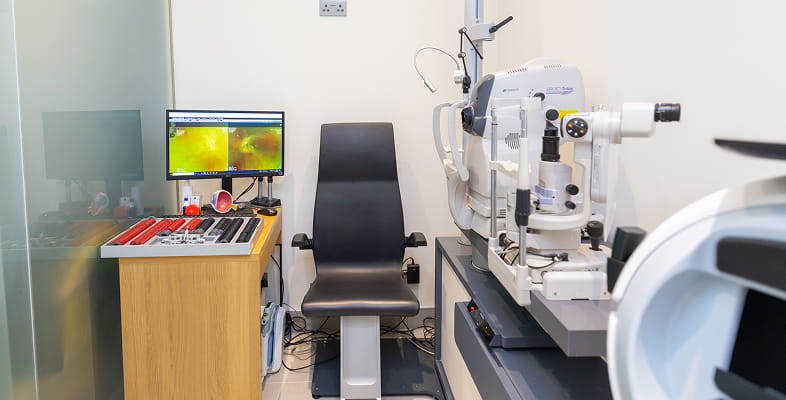
An advanced screening appointment at Vision in the Village Opticians in Southfields typically takes 45-60 minutes, allowing sufficient time for comprehensive assessment, detailed imaging, and thorough discussion of your results. Your appointment begins with a consultation where our optometrist reviews your medical history, current medications, family health history, and any specific concerns you wish to address.
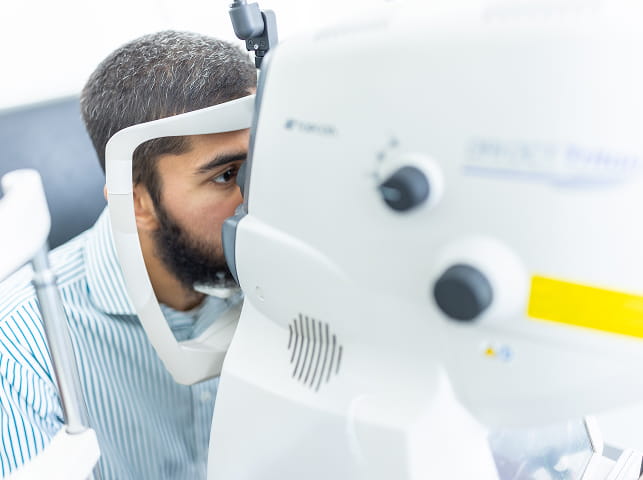
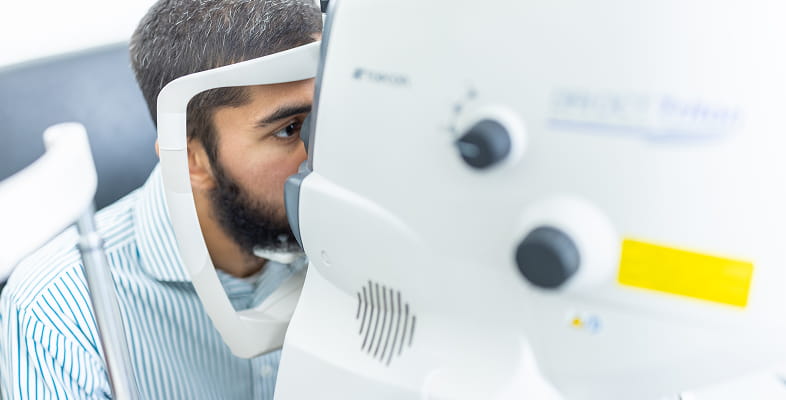
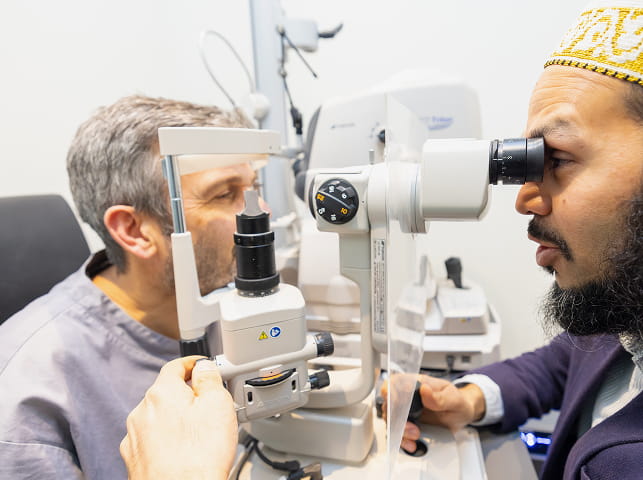
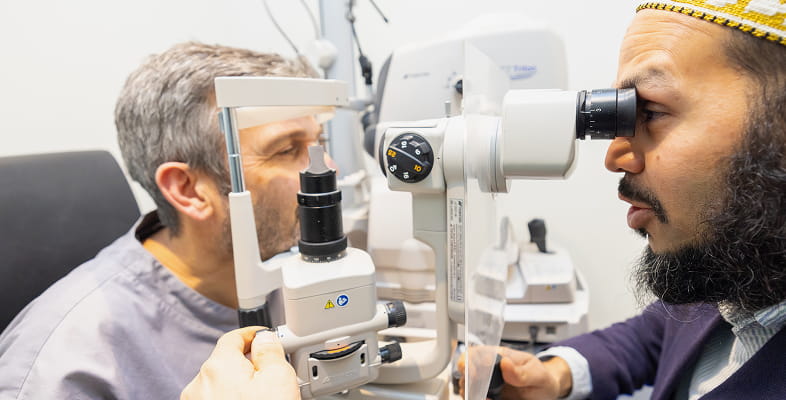
We then conduct a standard comprehensive eye examination including visual acuity testing, refraction to determine your prescription, eye movement and binocular vision assessment, and preliminary eye health evaluation using slit lamp biomicroscopy. The OCT scanning procedure takes just seconds per eye, you simply rest your chin on a support and look at a fixation target while the scanner captures cross-sectional images of your retinal layers using harmless light waves.
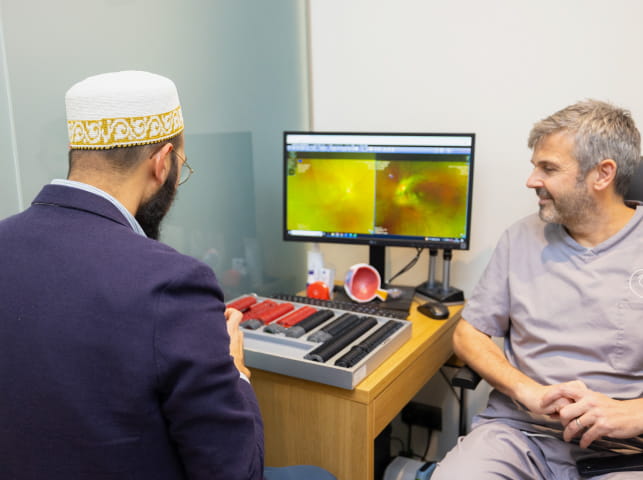
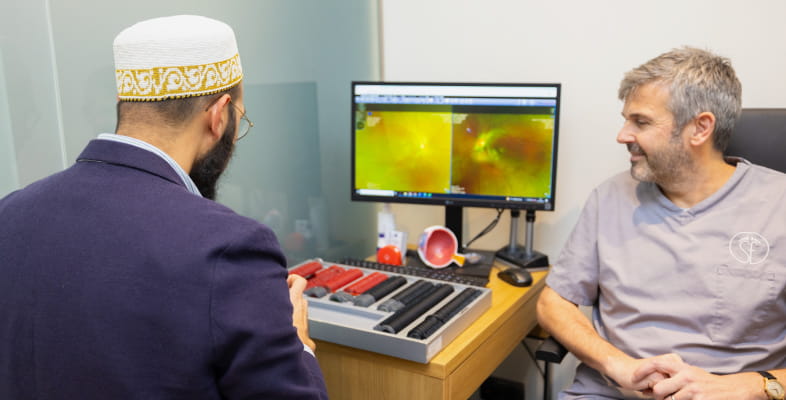
There’s no physical contact with your eye, no uncomfortable air puffs, and no discomfort whatsoever. The cardiovascular health screening through retinal imaging takes approximately 3-5 minutes and involves capturing high-resolution photographs of the blood vessels at the back of your eye using our advanced retinal camera. Again, this is completely non-invasive and painless, requiring only that you keep your eye steady while looking at a target. Following the imaging procedures, your optometrist analyses the results using specialised software that highlights any areas of concern and compares your measurements against normative databases. The immediate results mean we can discuss findings with you during the same appointment, explaining what the images show, whether any abnormalities are present, and what actions if any are recommended.
If the screening identifies potential concerns, whether eye disease or cardiovascular risk markers, we provide detailed explanation, written reports, and referral letters to your GP or appropriate specialist services. You’ll receive copies of your retinal images and OCT scans for your records, and all results are stored securely in your clinical file for future comparison. Most patients find the experience comfortable, informative, and reassuring, leaving with comprehensive understanding of their eye health and overall wellbeing status.